The Complete Guide to Colour Proofing with GMG
Master the essentials of certified colour proofing and ISO 12647 standards. Our comprehensive guide covers everything from ΔE tolerances to Fogra vs GRACoL workflows. Use the links below to jump to a specific topic and ensure your print production is always accurate.
- Contract Proofing Standards
- What Is a Contract Proof and Why It Matters
- ISO 12647 Explained: The Standard for Proof Accuracy
- GRACoL vs Fogra: Choosing the Right Standard
- Understanding Tolerances in Contract Proofing
- Color Gamut Requirements in Certified Proofs
- When to Use Contract Proofs in Client Projects
- Certifying a Proofing System for ISO Compliance
- Working with Certified Print Partners
- Audit Trails and Documentation in Contract Proofing
- The Lifecycle of a Certified Proof
- Contract Proofing for Large Format Printing
- Proofing Across Global Supply Chains
- Choosing Papers for Contract Proof Accuracy
- Understanding ΔE (Delta E) in Colour Proofing
- Mistakes That Invalidate Contract Proofs
- Standard Lighting Conditions for Proof Viewing
- Third-Party Certification vs In-House Standards
- Tools for Contract Proofing Validation
- Legal Considerations Around Proof Accuracy
- Contract Proof Archiving and Retrieval
Contract proofing standards are the technical benchmarks, such as ISO, Fogra, and GRACoL, that define what constitutes a certified colour proof. These standards ensure print accuracy by providing a universal language for colour reproduction across different devices and locations.
Essential Standards for Certified Print Accuracy
Learn the key standards like ISO, Fogra & GRACoL that define certified colour proofs for print accuracy.
Certified standards like ISO 12647-7 provide the mathematical framework for color consistency. Without these benchmarks, a digital proof is simply a ‘nice picture’ rather than a technically accurate simulation of the final press result.

A contract proof is a legally binding representation of the final printed result. It is essential for maintaining high print quality and serves as a critical safety net that protects clients and printers from expectations not meeting reality.
Why a Contract Proof is Your Best Safety Net
Discover what contract proofs are, why they’re essential for print quality, and how they protect clients.
A true contract proof acts as a legal insurance policy between the designer and the printer. It sets a physical expectation that must be met on press, reducing the risk of costly reprints and client disputes.

ISO 12647 is the global “rulebook” for proof accuracy. This section provides a deep dive into how the standard is implemented and its vital role in ensuring that a digital file translates perfectly into a physical product.
Mastering ISO 12647 for Global Print Consistency
Deep dive into ISO 12647 standard, its role in proof accuracy, and implementation guidelines.
This international standard dictates the exact primary colors, dot gain, and paper whites required for professional printing. Following ISO 12647 ensures that a file printed in London will match the same file printed in New York.

Selecting the right proofing standard depends on your specific workflow. We compare GRACoL (common in North America) and Fogra (common in Europe) to help you pick the best fit for your print project.
Choosing Between Fogra and GRACoL Workflows
Understand the difference between the North American GRACoL standard and the European Fogra standard to ensure global print consistency.
While Fogra is the dominant standard in Europe (FOGRA51/52), GRACoL is the preferred specification for North American commercial offset printing. We support both to ensure your global brand stays consistent across all territories.

In the world of professional print, “close enough” isn’t an option. We explain how to interpret and manage ΔE (Delta E) tolerances to maintain strict colour consistency and proof accuracy throughout your run.
How We Calculate Delta E (ΔE) Tolerances
Learn how to interpret and manage ΔE tolerances to maintain colour consistency and proof accuracy.
Color tolerance is measured in Delta E (ΔE). For a certified contract proof, we maintain a ΔE of less than 1.0 for the media wedge, which is the threshold where the human eye can barely perceive any difference.

To achieve certified output, your proofing system must meet specific colour gamut requirements. This ensures the device can actually reproduce the vividness and depth of the colours intended in the design.
Meeting Color Gamut Requirements for Brand Assets
Ensure Certified Output.
Certified proofing requires a ‘High Gamut’ printer. Our systems cover over 98% of the Pantone Solid Coated range, ensuring even the most vibrant brand colors are accurately represented before you go to press.

Predictable results are the hallmark of a professional project. We outline when it is essential to use contract proofs—typically for high-stakes branding and large-scale commercial runs—to ensure client satisfaction.
Strategic Moments to Request a Contract Proof
Learn when it’s essential to use contract proofs in client projects to ensure predictable print results.
Use a contract proof for any project where color is critical, such as high-end packaging, luxury fashion catalogs, or corporate branding. If the color must be ‘right,’ a standard laser print is never enough.

Achieving ISO accuracy requires a systematic approach. This guide provides a step-by-step look at how to certify your proofing system for full compliance with international standards.
The Path to ISO Compliant System Certification
Step-by-step guide to certifying your proofing system for ISO accuracy and compliance.
System certification involves calibrating the printer, the ink, and the specific paper substrate as a single unit. This ‘closed-loop’ system is verified daily to ensure it never drifts from the ISO standard.

Collaboration is key to quality. We share best practices for working with certified print partners to ensure your brand’s visual identity remains consistent from the first proof to the final pallet.
Maintaining Brand Integrity with Print Partners
Best practices for collaborating with certified proof partners to ensure quality and consistency.
Communicating with your printer is easier when you both speak the language of ISO standards. Providing a certified proof allows your printer to quickly match colors on their press, saving time during make-ready.

Maintaining quality standards requires proof of process. Learn how audit trails and detailed documentation provide a verifiable record that every proof has met the necessary technical requirements.
The Importance of Traceable Audit Trails
Understand the role of audit trails and documentation in maintaining proofing quality standards.
Every certified proof we produce includes a printed validation label. This label contains the date, the ΔE results, and the pass/fail status, providing a transparent audit trail for quality control.
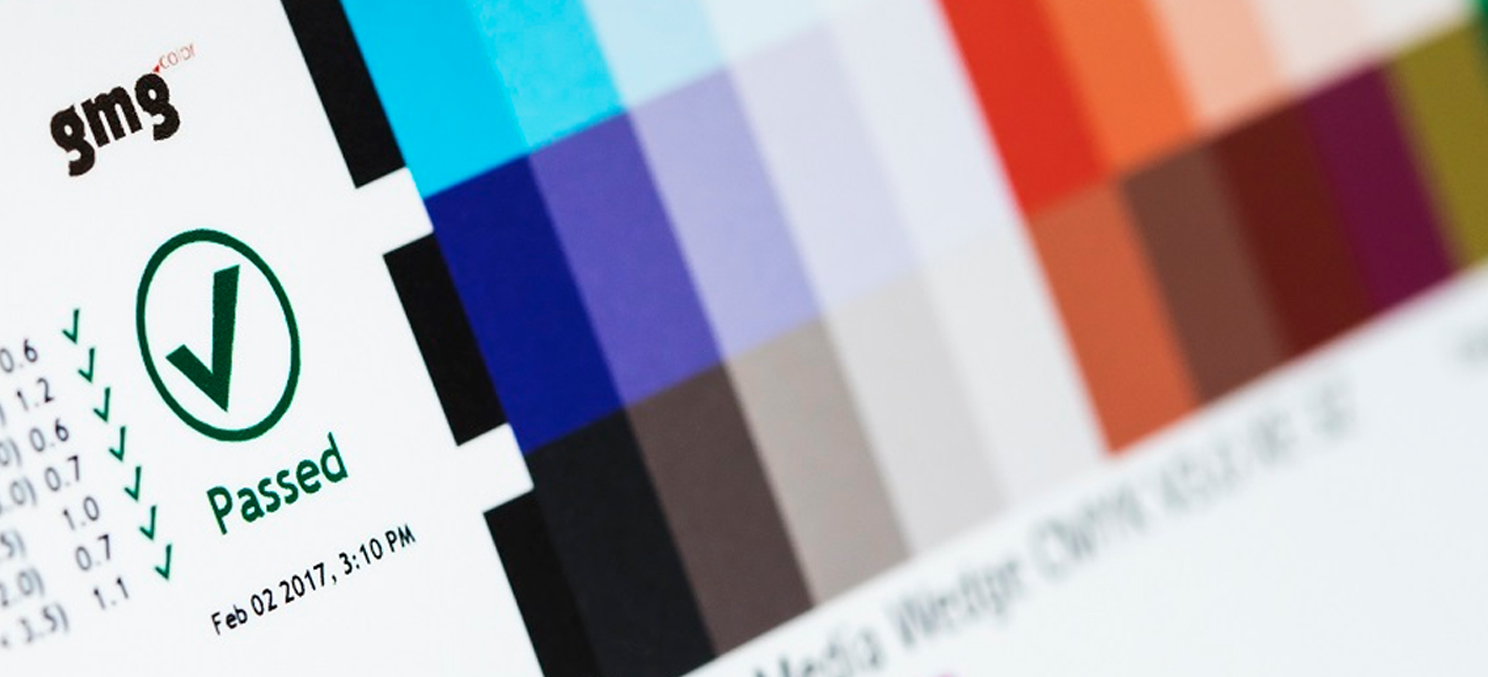
A certified proof has a specific journey: from initial creation and technical validation to client approval and long-term archiving. Explore each stage of the lifecycle to understand how quality is maintained at every turn.
Managing the Full Certified Proof Journey
Explore the full lifecycle of certified proofs—from creation and approval to archiving.
A proof’s lifecycle doesn’t end at approval. We recommend archiving proofs in a cool, dark environment to prevent light-fade, ensuring they remain a valid reference for future reprints or brand audits.

Large format projects present unique challenges. We offer specialized advice on producing accurate contract proofs for oversized jobs, ensuring that scale doesn’t compromise colour fidelity.
Scale and Accuracy in Large Format Proofing
Specialized advice for producing accurate contract proofs in large format print jobs.
Scale shouldn’t compromise accuracy. Our large format proofing systems allow for full-size mockups of posters and signage while maintaining the same strict ISO color tolerances as our smaller proofs.
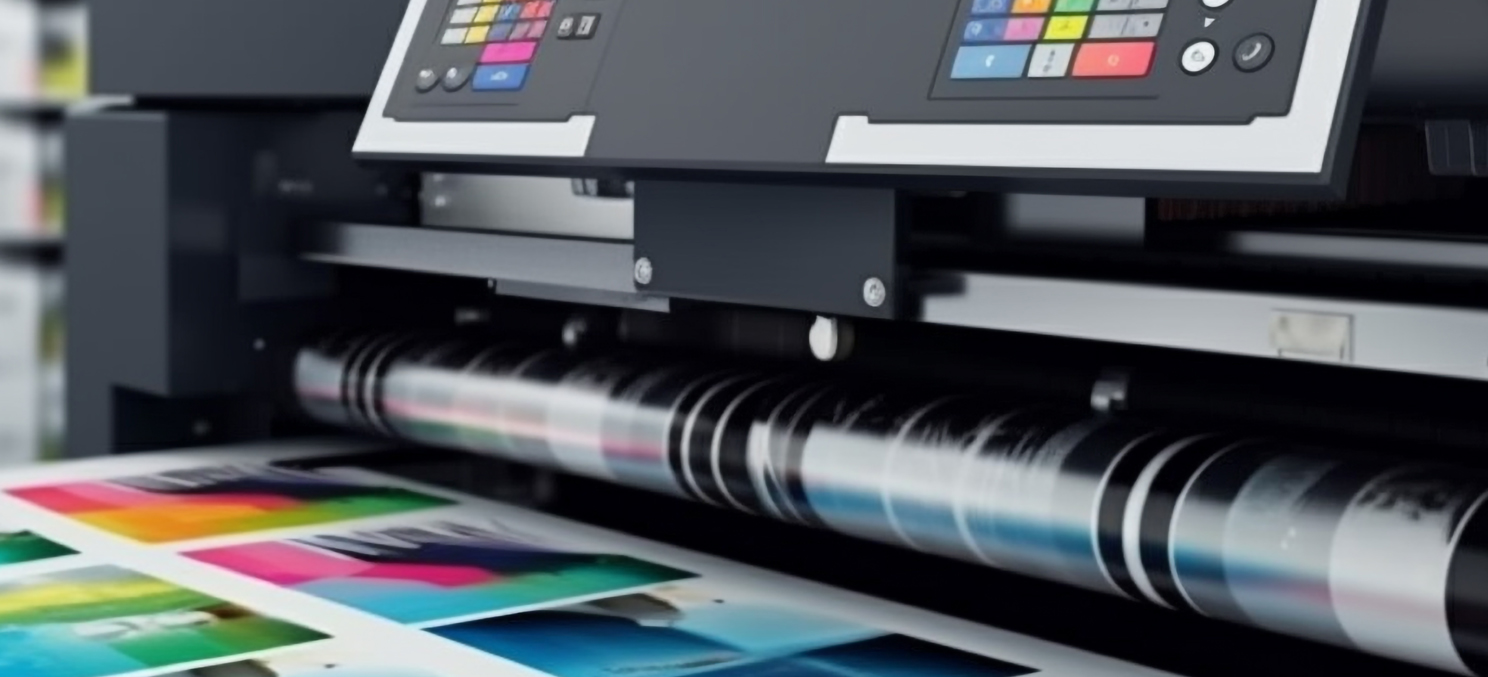
When your print vendors are spread across the globe, consistency is a challenge. Learn how to maintain unified proofing standards across distributed supply chains to ensure your product looks the same everywhere.
Unified Proofing for Global Print Chains
How to maintain consistent proofing across distributed print chains and remote vendors.
In a global market, your digital files travel further than you do. Utilizing standardized Fogra or GRACoL proofs allows disparate vendors to hit the same color target without needing to see the original product.

Not all papers are created equal. This guide helps you choose certified proofing papers that accurately replicate the substrate of the final printed product for maximum visual accuracy.
Replicating Final Stock with Certified Papers
Guide to choosing certified proofing papers that accurately replicate final printed colours.
The paper white of your proof must match the paper white of your final stock. We offer a variety of OBA-free (Optical Brightening Agents) papers to replicate everything from high-gloss magazines to uncoated stocks.

ΔE is the mathematical measure of colour difference. We explain how to measure it and define the acceptable thresholds required for a “pass” in professional contract proofing.
The Science of Delta E in Colour Management
What ΔE means in proofs, how to measure it, and the acceptable thresholds for accurate results.
Delta E is the distance between two colors in a 3D color space. By keeping our ΔE variations extremely low, we guarantee that the transition from digital design to physical print is seamless.

Even a small error can render a proof useless as a legal or technical reference. We highlight the most common mistakes—such as improper calibration or wrong paper—and show you how to avoid them.
How to Avoid Mistakes That Void Certification
Learn the most common mistakes that can invalidate a contract proof and how to avoid them.
Common pitfalls include viewing proofs under the wrong light or using non-certified inks. Even using the wrong ‘Rendering Intent’ during the PDF export can render a professional proof technically invalid.

Color changes depending on the light source. We explain why using standard lighting booths (like D50) is crucial for an accurate and objective evaluation of your contract proofs.
The Role of D50 Lighting in Colour Evaluation
Understand why using standard lighting booths is crucial for accurate proof evaluation.
Always view proofs under D50 (5000 Kelvin) lighting. Viewing a proof under warm office lights or yellow warehouse bulbs will change how the colors appear, leading to false ‘errors’ in judgment.

Should you rely on your own internal metrics or seek outside validation? We evaluate the pros and cons of third-party vs. in-house proofing standards to help you decide what’s best for your business.
In-House Quality vs. Third-Party Validation
Evaluate the pros and cons of third-party vs in-house proof certification standards.
While in-house checks are good, third-party certification (like Fogra) provides an unbiased stamp of approval. It proves to your clients that your quality is verified by an international authority.

From colour bars and spectrophotometers to specialized software, we provide an overview of the essential tools used to validate and verify that a proof is truly “certified”.
Professional Hardware for Proof Validation
Overview of colour bars, spectrometers, and software tools used to validate certified proofs.
We utilize X-Rite spectrophotometers and GMG ColorProof software to verify every pixel. These professional-grade tools are essential for the ‘measure-check-verify’ workflow required for ISO compliance.

Proof accuracy isn’t just about aesthetics; it has legal implications. We discuss how contract proofs function in branding contracts and the role they play in managing client expectations and liabilities.
Managing Risk and Legal Print Requirements
Legal implications of proofing accuracy in branding, contracts, and client expectations.
In the event of a print error, a certified contract proof is your primary piece of evidence. It proves exactly what was approved, protecting you from liability if the final print doesn’t match the signed-off version.

Efficiently organizing your files is the final step. This section covers best practices for the long-term archiving and quick retrieval of certified proof documents for future reference or reprints.
Data Security for Proof Archiving and Retrieval
Best practices for organizing, archiving, and retrieving certified proof documents efficiently.
Digitally archiving your proof data allows for instant recall of color settings years later. This ensures that a product launch in 2026 will match a reprint in 2028 with perfect consistency.